A Complete Guide on How to Solve Solar Panel Problems
Solar energy has become one of the most reliable and eco-friendly ways to power homes, businesses, and industries. With growing concerns about rising electricity costs and sustainability, many people have shifted to solar systems. However, like any electrical setup, solar panels can develop faults over time. Knowing how to solve solar panel problems is essential to ensure smooth energy production and to avoid costly downtime.
In this guide, we will cover common issues faced by solar users, how to identify them, and practical solutions for fixing solar panel problems. We will also discuss when it is best to seek professional help, especially in cases that involve technical repairs.
Why Do Solar Panels Develop Problems?
Solar panels are designed to last for years, but external factors and system components can cause issues. Some of the most common reasons include
- Weather exposure – Heavy rains, storms, and dust can damage the surface.
- Poor installation – Incorrect wiring or faulty placement affects efficiency.
- Aging components – Inverters, batteries, and connectors wear out over time.
- Lack of maintenance – Ignoring regular cleaning and checks often leads to energy loss.
Understanding these causes is the first step toward effective solar panel repair and maintenance.
Common Solar Panel Problems and Their Solutions
Understanding these common situations allows you to take quick action and prevent long-term damage. In most cases, fixing solar panel problems early not only saves money but also ensures your system continues running at peak efficiency for years to come. Below are some of the frequent issues you might face and how to resolve them.
1. Low Power Output
If your solar system is not generating enough electricity, it might be due to dirt, shade, or internal faults.
Solution
- Clean the panels regularly with water and a soft cloth.
- Ensure there are no nearby trees or buildings blocking sunlight.
- Check the inverter display for error messages. If the inverter is faulty, it may require power supply repair by a technician.
Sometimes, low output may also be linked to aging panels. After about 20–25 years, the efficiency naturally drops. If your system is older, it might be worth upgrading certain parts rather than spending too much on minor fixes.
2. Cracks and Physical Damage
Panels can develop cracks from hail, debris, or accidents during cleaning. Even small cracks can reduce efficiency.
Solution
- Minor cracks can sometimes be sealed with solar repair tape as a temporary fix.
- For major damage, replacement of the affected panel is the safest option.
- Avoid walking on panels to prevent unnecessary strain.
It’s important to catch physical damage early. Even a small crack allows moisture and dirt to seep in, which can damage internal cells. Periodic inspections help spot these issues before they spread.
3. Hot Spots on the Panel
Hot spots occur when a part of the panel overheats due to dust, shading, or defective cells. This can eventually cause permanent damage.
Solution
- Inspect the panels with a thermal imaging tool if available.
- Clean the affected areas and check for debris.
- If the issue persists, consult an expert who specializes in fixing solar panel problems.
Hot spots can also shorten the lifespan of the entire system. Professional diagnosis ensures whether the issue is due to one faulty cell or a broader electrical imbalance.
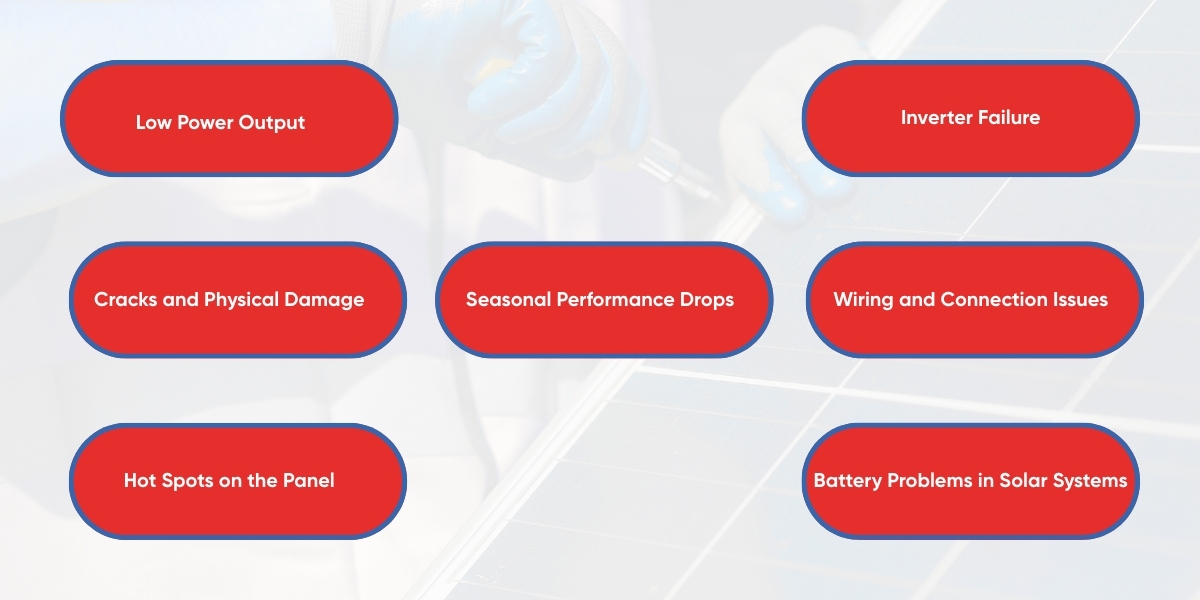
4. Inverter Failure
The inverter is the brain of a solar system. If it stops working, the entire setup will fail to produce usable electricity.
Solution
- Restart the inverter and check error codes.
- Inspect wiring connections to ensure they are not loose.
- If the inverter continues to malfunction, professional solar panel repair services may be required.
Since inverters are costly, timely servicing helps extend their life. Some advanced inverters also come with mobile monitoring apps, which alert you of faults before they grow bigger.
5. Wiring and Connection Issues
Loose or corroded wires can interrupt the flow of electricity, leading to power drops or complete system shutdown.
Solution
- Visually inspect wiring for corrosion, wear, or burn marks.
- Use protective coverings for exposed wires.
- For industrial or large systems, contact an industrial electronics repair team to ensure safety and reliability.
Bad wiring can cause not just efficiency loss but also safety hazards such as sparks or fire risks. For larger solar setups in factories or offices, professional inspection is strongly advised.
6. Battery Problems in Solar Systems
For systems with battery storage, problems such as overcharging, undercharging, or leaks can arise.
Solution
- Check electrolyte levels if you use lead-acid batteries.
- Keep batteries in a cool, dry location.
- Replace old batteries when capacity drops significantly.
Maintaining batteries ensures backup power during nighttime or cloudy days. Ignoring them can result in sudden outages even if your panels are working fine.
7. Seasonal Performance Drops
Solar energy production can vary with the weather. In winter or rainy seasons, panels may not generate the same power as in summer.
Solution
Adjust expectations based on seasonal changes.
Consider adding more panels or battery backup for extra storage.
Monitor usage and conserve energy during low-output months.
In regions with extreme weather, installing a hybrid system that combines solar with grid power is often the best way to guarantee consistent electricity.
Keeping Your Solar System Efficient for Years
If your solar power system develops issues beyond basic cleaning and checks, it is always wise to consult professionals. Experts in solar panel repair and industrial electronics repair have the right tools and experience to restore performance quickly. For those in Dubai, companies like Horizon Elect Devices provide trusted solutions that keep solar systems running efficiently.
By staying proactive and addressing issues early, you can enjoy uninterrupted, eco-friendly power for years to come.